


Last Updated: November 10, 2026
Quick Summary
To find transparent brands that help children, ask for proof before trusting a mission statement: confirm the charity exists, pull its IRS Form 990, and match the brand's claim to the charity's own records. A brand that names its partners, states a clear amount, and shares a receipt is one you can verify.
- Work through a five-item transparency checklist to check any brand in about fifteen minutes.
- Verify donations by cross-checking the brand's claim against the charity's own records and IRS Form 990.
- Ask brands which charities they support, what percentage goes to them, and for a receipt or confirmation.
- Read privacy policies in four passes and look for a Reject or Manage preferences option on cookie banners.
- Choose a piece you will actually wear, with weight to it and a clasp that closes firmly.
Table of Contents
- Start With a Simple Transparency Checklist
- How to Verify a Company's Charitable Donations
- Questions to Ask Brands About Charity Donations
- Read Ethical Jewelry Sourcing Practices Like a Buyer, Not a Chemist
- Why Brands That Donate to Children's Charities Need a Paper Trail
- Check the Data Privacy and Verification Gaps Most Shoppers Miss
- Choose the Piece You Will Actually Wear
- Frequently Asked Questions
Start With a Simple Transparency Checklist
Learning how to find transparent brands that help children starts with one habit: ask for proof before you fall in love with a mission statement.
Transparency is the practice of sharing verifiable facts about where money goes, where materials come from, and who makes the decisions, not a feeling you get from a pretty landing page.
Here is the checklist we suggest you keep on your phone:
- The brand names its charity partners in plain language
- The donation amount or percentage is stated clearly
- Sourcing claims name countries or suppliers
That list takes minutes to work through. Most shoppers skip it entirely.
The Five Questions Every Claim Should Survive
Every mission claim should survive five questions. If a brand stumbles on two or more, slow down before you buy.
- Who receives the money? A named charity beats "children in need" every time.
- How much? A percentage or set amount beats vague language like "a portion."
- How often? Monthly giving looks different from a one-time gift.
- Can I check it? The charity's own site should confirm the partnership.
- Who do I ask? A contact page with a real reply is a good sign.
A clear number is a good place to start: look for a brand that states exactly what share of each sale goes to charity.
Keep this checklist handy to check any brand in about fifteen minutes.
| Checklist item | What to look for |
|---|---|
| Charity partners | Brand names them in plain language |
| Donation amount | Amount or percentage stated clearly |
| Sourcing claims | Countries or suppliers named |
| Contact | A real person or team answers questions |
| Giving story | Updated at least once a year |
How to Verify a Company's Charitable Donations
You verify a company's charitable donations by cross-checking the brand's claim against the charity's own records. The charity has no reason to inflate a corporate partner's numbers, so its site is the honest second opinion. Here is the paper trail, step by step.
Step 1: Confirm the Charity Exists and Is Legitimate
Start with the IRS Tax Exempt Organization Search. Search the charity's exact legal name. You are looking for three things: the organization appears in the database, its status is active, and its name matches what the brand printed.
Then check your state's charity regulator. Most states require charities that solicit donations to register, and many publish a searchable registry. If the brand names a small local charity, the state registry is often the only public record that exists.
Step 2: Pull the Charity's IRS Form 990
The Form 990 is the annual information return that most tax-exempt organizations file with the IRS, and it is public. Search the charity's name on ProPublica's Nonprofit Explorer or the IRS's own tax-exempt organization search.
Here is what to look for:
- Total revenue. A brand claiming a large donation to a charity with small annual revenue is a mismatch worth questioning.
- Schedule I. If the brand says it gave a specific amount, the charity's 990 should reflect a gift of roughly that size in the year claimed.
- Program expenses. A charity that spends most of its budget on programs rather than overhead is generally a stronger partner, though overhead ratios alone do not tell the whole story.
Watch out: a brand that names a charity but cannot tell you its legal name makes verification difficult. Ask for the legal name before you trust the claim.
Step 3: Match the Brand's Claim to the Charity's Own Records
A mismatch is the loudest warning sign in this whole process. If a brand says it funds a children's hospital and the hospital's partner list has never heard of them, walk away.
Watch for these gaps:
- The brand names a charity that does not appear on the charity's site
- The charity's partner page lists a different giving level than the brand claims
- The brand says "proceeds" without ever naming an amount
One mismatch can be a slow website update. If you want a curated starting point, this list of charitable jewelry brands shows what verified giving looks like in practice.
Step 4: Ask for the Receipt
The final step is the one most shoppers skip: ask the brand for proof of a specific donation. A transparent brand can share a redacted receipt, a partner letter, or a dated confirmation from the charity.
Questions to Ask Brands About Charity Donations
The fastest way to test a brand is to ask two or three direct questions and watch how it answers. A transparent company replies with specifics. A shaky one replies with feelings.
Try these:
- "Which charities do you support, and can you share their names?"
- "What percentage of each sale goes to them?"
- "When was your last donation, and how was it sent?"
You are not being nosy. You are being a good steward of your money.
The FTC's guidance on advertising and endorsements makes clear that companies must be truthful and not misleading in their marketing.
If a brand gets defensive or sends only a generic reply, that tells you something too. You can always contact our team with any question about our giving.
Read Ethical Jewelry Sourcing Practices Like a Buyer, Not a Chemist
You do not need a geology degree to judge ethical jewelry sourcing practices. You need to know which words in a product listing are specific and which are decoration.
Sourcing is the process of tracing materials from mine or lab to finished piece.
Here is what to look for on any product page:
- Named countries or regions for stones and metals
- Whether stones are natural, lab-created, or treated
- Who assembles the piece and where
Our pieces are made with authentic gems, stones, and metals, sourced globally and blended into handmade designs.
What a Real Sourcing Statement Names
A real sourcing statement names places and materials. "Ethically sourced" on its own names nothing.
Compare these two lines:
- Weak: "Made with ethically sourced materials."
- Strong: "Handmade with natural gemstones and metal components sourced from suppliers in [region], assembled by our small team."
The strong version gives you something to check. If you want to go deeper, this guide on how to identify ethically sourced gemstones walks through the questions to ask about stones specifically.
Watch out: a listing that calls stones "authentic" without saying natural, lab-created, or treated is hiding the one detail you actually need. Ask before you buy.
Why Brands That Donate to Children's Charities Need a Paper Trail
Brands that donate to children's charities need a paper trail because memory is not evidence. A receipt, a partner letter, or a dated giving page is what turns a nice story into a fact.
Charities themselves expect this. Nonprofit governance standards generally call for boards to review how funds are raised and spent, and corporate partners usually appear in annual reports.
Ask yourself three things about any giving page:
- Is there a date on it?
- Does it name specific organizations?
- Has it been updated since the brand launched?
If the answer to all three is no, the giving claim may be aspirational rather than real. This article on online gift marketplaces that contribute to children's lives shows how a visible giving record builds trust over time.
Check the Data Privacy and Verification Gaps Most Shoppers Miss
Data privacy is where even careful shoppers stop looking, and it is exactly where a values-driven brand should be easiest to read. A company that protects children should protect your information too.
Read the Privacy Policy in Four Passes
You do not need a law degree. Read the policy in four passes, and you will know more than most shoppers ever do.
- What is collected. Look for a plain list: name, email, shipping address, payment details, device data, browsing behavior. A policy that says "information you provide" without naming categories is vague on purpose.
- Who it is shared with. Search the page for the word "share," "sell," or "third parties." Under the California Consumer Privacy Act (CCPA), businesses must disclose whether they sell or share personal information, and many policies now include a "Do Not Sell or Share My Personal Information" link. If that link is missing on a site that collects data from California residents, treat it as a red flag.
- How long it is kept. A specific retention period (for example, "order data kept for seven years for tax purposes") beats "as long as necessary." Vague retention means no one has thought about it.
- How to reach the privacy contact. A named email or form for privacy requests is a sign the brand has a process. No contact means no accountability.
Watch out: a policy that promises to "protect children's privacy" but never mentions the Children's Online Privacy Protection Act (COPPA) is likely copying language rather than following a real practice. COPPA governs how sites collect data from children under 13, and a brand that markets to families should be able to explain in plain language how it complies.
Check the Checkout and the Cookies
Two quick checks at the point of purchase tell you a lot:
- Secure payment page. The checkout URL should begin with "https" and show a lock icon. The brand should not store your full card number; a reputable payment processor handles that.
- Cookie banner with real choices. A banner that only says "Accept" is not a choice. Look for "Reject" or "Manage preferences" alongside it. Under the California Consumer Privacy Act, consumers have the right to opt out of the sale or sharing of personal information, and a banner that hides that option is a warning sign.
Then look at the brand's verification habits. Does it answer emails from a real address? Does it publish updates? Does it correct mistakes publicly? Accountability is a habit, not a badge.
The Verification Gaps to Probe Directly
Ask the brand three questions by email and keep the replies:
- "Do you sell or share customer data with any third party? If so, which categories?"
- "How do you handle data from customers who appear to be minors?"
- "Can you point me to the section of your privacy policy that covers deletion requests?"
A transparent brand answers with specifics and links. A shaky one replies with feelings or a generic template. The pattern across three replies tells you more than any single answer.
One more gap: social proof. Reviews that describe the product in specific detail are harder to fake than five-star ratings with no words. Read the three-star reviews first. They usually tell the truth, and they often mention how the piece felt to wear day after day.
Choose the Piece You Will Actually Wear
The last step is the one most shoppers rush: pick something you will genuinely wear.
Think about your week. What do you reach for on a Tuesday morning?
Then think about how it should feel. A well-made piece has weight to it. The clasp closes firmly.
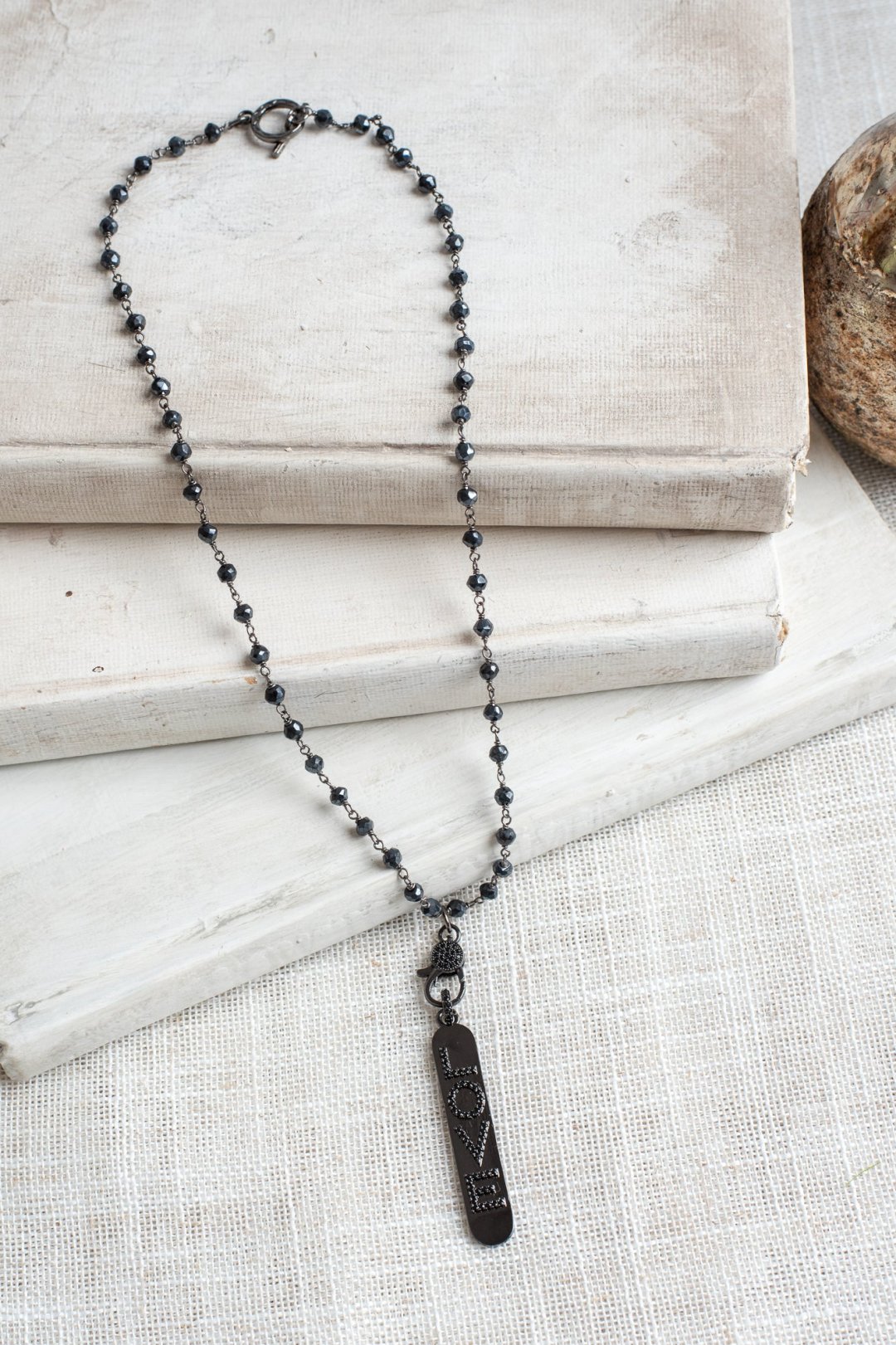
We design our pieces as wearable reminders of faith, hope, and growth, made to be worn often rather than saved for special occasions. If you want to see elegant Christian jewelry that supports charities, you can browse the collection and judge the craftsmanship for yourself.
The real challenge is not finding a brand with a mission. It is finding one that will show you the receipts.
Frequently Asked Questions
How can I tell whether a brand's charitable giving is transparent?
Look for three things: a named charity, a stated percentage or amount, and a reporting cadence. A transparent brand will tell you which organization receives the money, what share of a sale goes to it, and how often it reports back. Then cross-check the charity's own website for a corporate partner listing. If the brand names no organization and offers no percentage, treat the giving claim as marketing until you find proof.
What questions should I ask a brand about its charitable partnerships?
Ask which specific charity receives the funds and whether it is a registered 501(c)(3). Ask what percentage of each sale is donated and whether that is calculated before or after costs. Ask when donations are sent and whether the brand publishes a total. Ask how long the partnership has run. A brand that answers these in writing, without deflecting to a general values page, has done the work to be answerable.
How can I check whether a brand's products are ethically sourced?
Start with the product page: it should name the materials and where they come from. Then look for a sourcing statement that identifies suppliers or regions and any third-party certification the brand holds. If the brand says only that materials are globally sourced, that describes a supply chain without disclosing it. Ask directly who makes the piece and where the stones originate, and see whether the answer is specific or vague.
What is the difference between a brand donation and a charity partnership?
A donation is a one-time or periodic transfer of money. A partnership is an ongoing relationship where the brand commits to a charity over time, often with a named program and regular reporting. Partnerships are easier to verify because the charity usually lists the brand as a corporate partner. When you evaluate brands that donate to children's charities, an ongoing partnership with a published total is stronger evidence than a single seasonal giveaway.


